
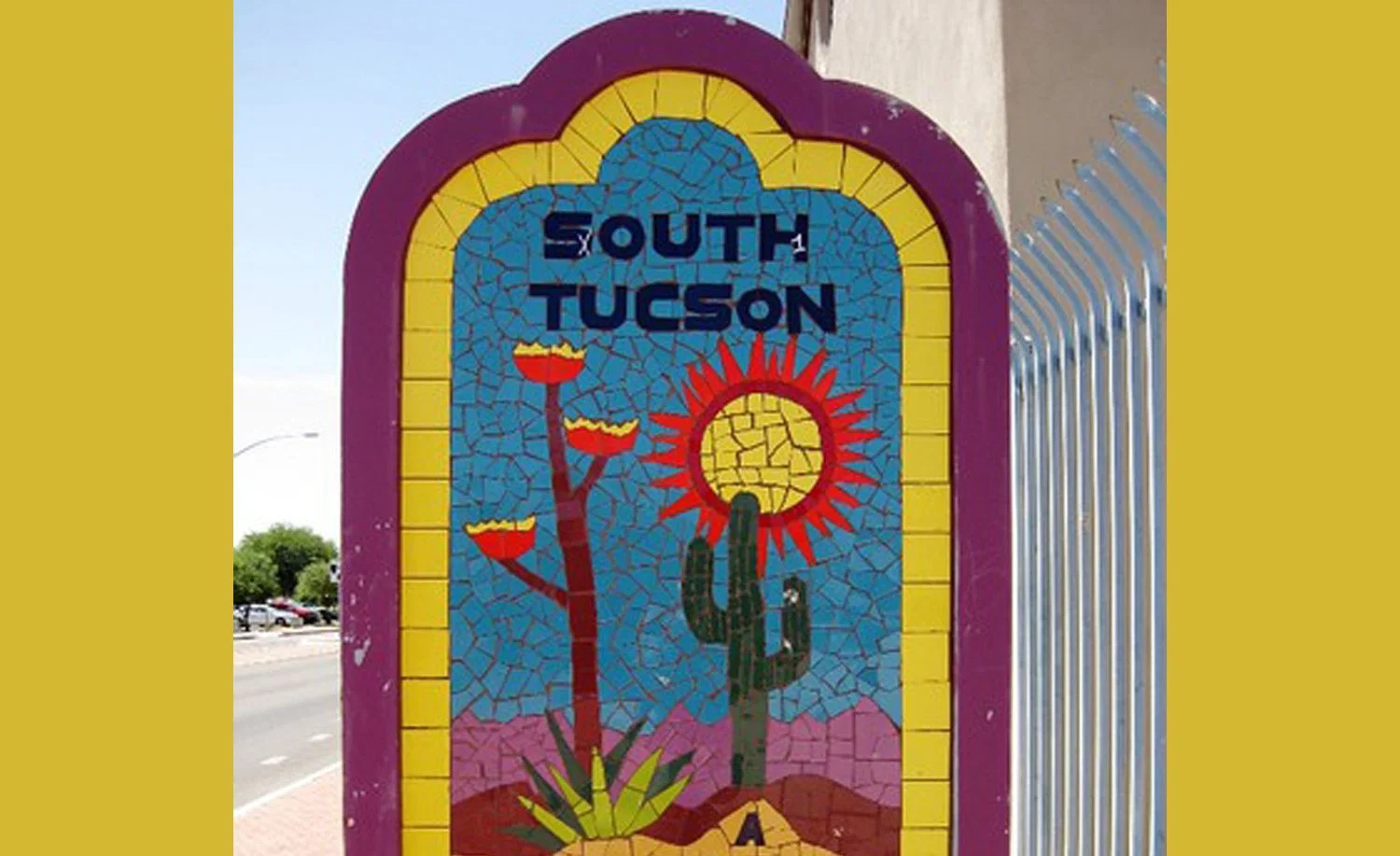
South Tucson is its own incorporated city, but geographically it is a small enclave inside Tucson proper, wrapped by South 4th Avenue's Mexican food corridor and the older residential blocks near Mission Lane. Any show tied to a business address here runs on downtown Tucson's venue calendar, not a separate market.
There is no convention hall, arena, or hotel ballroom within South Tucson's own boundary. Every real event floor a South Tucson exhibitor would use sits a short drive north: Tucson Convention Center, Tucson Arena, and the Music Hall complex are all reachable in well under ten minutes from South 4th Avenue, which is closer than most Tucson neighborhoods get to their own downtown core.
That proximity is the actual story for this page. A brand or organization based in South Tucson does not need a separate logistics plan for the town; it needs the same downtown Tucson production plan any central-city exhibitor would use, with move-in timing and crew calls that barely change because the drive is so short. That parity is worth stating plainly rather than assuming, since some planning briefs default to treating any address outside the immediate TCC footprint as a farther-out concern than it actually is here.
Key priorities for South Tucson, AZ
- Route every South Tucson booth build through the downtown Tucson venue cluster rather than searching for a local hall that does not exist.
- Use the short drive time from South 4th Avenue to TCC as a scheduling advantage for late load-ins and quick crew turnarounds.
- Coordinate freight and drayage through the same downtown carriers and dock schedules used for any central Tucson show.
- Treat South Tucson exhibitors and vendors as downtown-core clients for staffing, storage, and warehouse proximity purposes.
- Factor in South 4th Avenue's restaurant and retail density when planning exhibitor hospitality or off-floor client entertaining tied to a show.
A city inside a city
South Tucson was incorporated in 1936 as its own municipality, and it has stayed that way even as Tucson grew up around it on every side. The result is a city of roughly 1.2 square miles and a few thousand residents that functions, for event logistics purposes, as a downtown Tucson neighborhood rather than a separate metro market.
For planning a trade show, activation, or corporate event tied to a South Tucson address, that distinction matters less than the geography. The venue search, the labor pool, and the freight routing are all the same ones used for any downtown Tucson booking. What South Tucson does add is a genuinely separate city government, its own police and fire departments, and its own municipal identity, which occasionally surfaces in permitting or licensing questions even when the physical event footprint is identical to a downtown booking.
No local venue, and that is fine
South Tucson has no convention center, arena, hotel ballroom, or purpose-built event hall of its own. That is normal for a city this size sitting this close to a major downtown core, and it does not create a gap in coverage.
Tucson Convention Center, Tucson Arena, the Linda Ronstadt Music Hall, and the Leo Rich Theater are all within a few minutes of South 4th Avenue. A South Tucson-based exhibitor books the same downtown floors as any other Tucson organization; the address on the paperwork does not change the venue options.
South 4th Avenue and the food-and-culture identity
South Tucson's public identity is built on South 4th Avenue's dense run of longstanding Mexican restaurants, taquerias, and family-owned businesses, along with a strong Mexican-American cultural presence that predates most of Tucson's downtown redevelopment. It is one of the more distinct commercial strips in the metro.
That character shows up in event planning mostly as a hospitality asset: exhibitors and out-of-town attendees working a downtown show often use South 4th Avenue for meals, catering pickups, or informal client entertaining because it sits a few blocks from the convention floor.
Freight and drayage
Freight for a South Tucson-tied show moves through the same downtown Tucson dock and drayage system used for TCC and Tucson Arena bookings. There is no separate carrier network or warehouse cluster specific to South Tucson itself.
Because the geography is so compact, trucks and crew vans reach South 4th Avenue addresses on the same schedule as any other central Tucson stop, which keeps advance-freight timing simple to plan. Local streets in South Tucson are narrower and more residential than the arterial roads feeding TCC directly, so larger trucks generally stay on 6th Avenue or Park Avenue rather than cutting through neighborhood side streets.
Labor and crew calls
Install and dismantle crews for a South Tucson-connected show are drawn from the same downtown Tucson labor pool used citywide. There is no local labor jurisdiction or separate union hall tied to South Tucson's small footprint.
The practical effect is a simpler crew call than in outlying parts of the metro: travel time between South 4th Avenue and TCC or the Arena is short enough that it rarely factors into scheduling decisions.
Move-in and move-out timing
Because South Tucson sits this close to the downtown venue cluster, move-in and move-out windows follow the venue's own schedule rather than a separate town-specific timetable. There is no added buffer needed for distance.
The advantage shows up most on tight-turnaround shows, where a South Tucson-based vendor or client can respond to a last-minute request on the TCC floor faster than a team coming from the far northwest or southeast side of the metro.
Who typically plans a South Tucson-tied event
Local businesses along South 4th Avenue occasionally host community events, vendor markets, or small activations tied to the neighborhood itself, separate from any downtown convention floor booking.
More often, the South Tucson connection is an address on file for a business, association, or vendor whose actual show activity happens at TCC, the Arena, or a downtown hotel a few minutes away.
Storage and staging
Booth storage and asset staging for South Tucson clients typically runs through the same downtown-adjacent warehouse space used for other central Tucson accounts, since there is no dedicated storage infrastructure inside South Tucson's small footprint.
That keeps pre-show staging and post-show reconfiguration on a predictable timeline, without the added drive time that outlying parts of the metro sometimes require.
How this location fits the broader Tucson market
South Tucson is best understood as part of the downtown Tucson trade show market rather than a distinct submarket with its own venue economics. Any planning brief tied to a South Tucson address should default to the downtown venue list and downtown logistics assumptions from the start.
That makes South Tucson one of the more straightforward addresses on the map to plan around, even though it carries its own city government and its own strong local identity.
Questions about South Tucson, AZ
Is there a convention center or event venue located in South Tucson itself?
No. South Tucson has no convention center, arena, or purpose-built event hall within its own city boundary. Shows tied to South Tucson addresses use downtown Tucson venues, primarily Tucson Convention Center and Tucson Arena, which sit minutes away.
How far is South Tucson from Tucson Convention Center?
Typically under ten minutes by road from South 4th Avenue, since South Tucson is a small enclave fully surrounded by the city of Tucson and sits close to the downtown core.
Do freight and drayage schedules differ for a South Tucson address?
No. Freight moves through the same downtown Tucson dock and carrier system used for any central Tucson booking. South Tucson's compact geography does not require a separate routing plan.
Is crew labor sourced locally within South Tucson?
Crew labor comes from the same downtown Tucson pool used for any TCC or Arena show. South Tucson does not have a separate labor jurisdiction or crew base.
What is South Tucson known for outside of trade show work?
South Tucson is known for its dense concentration of long-running Mexican restaurants along South 4th Avenue and its distinct Mexican-American cultural identity, which predates much of the surrounding city's downtown growth.
Should a South Tucson business plan its event logistics differently than a downtown Tucson business?
Generally no. Given the short distance to TCC and the Arena, a South Tucson-based exhibitor should plan around the same downtown venue list, labor pool, and freight routes as any other central Tucson organization.