
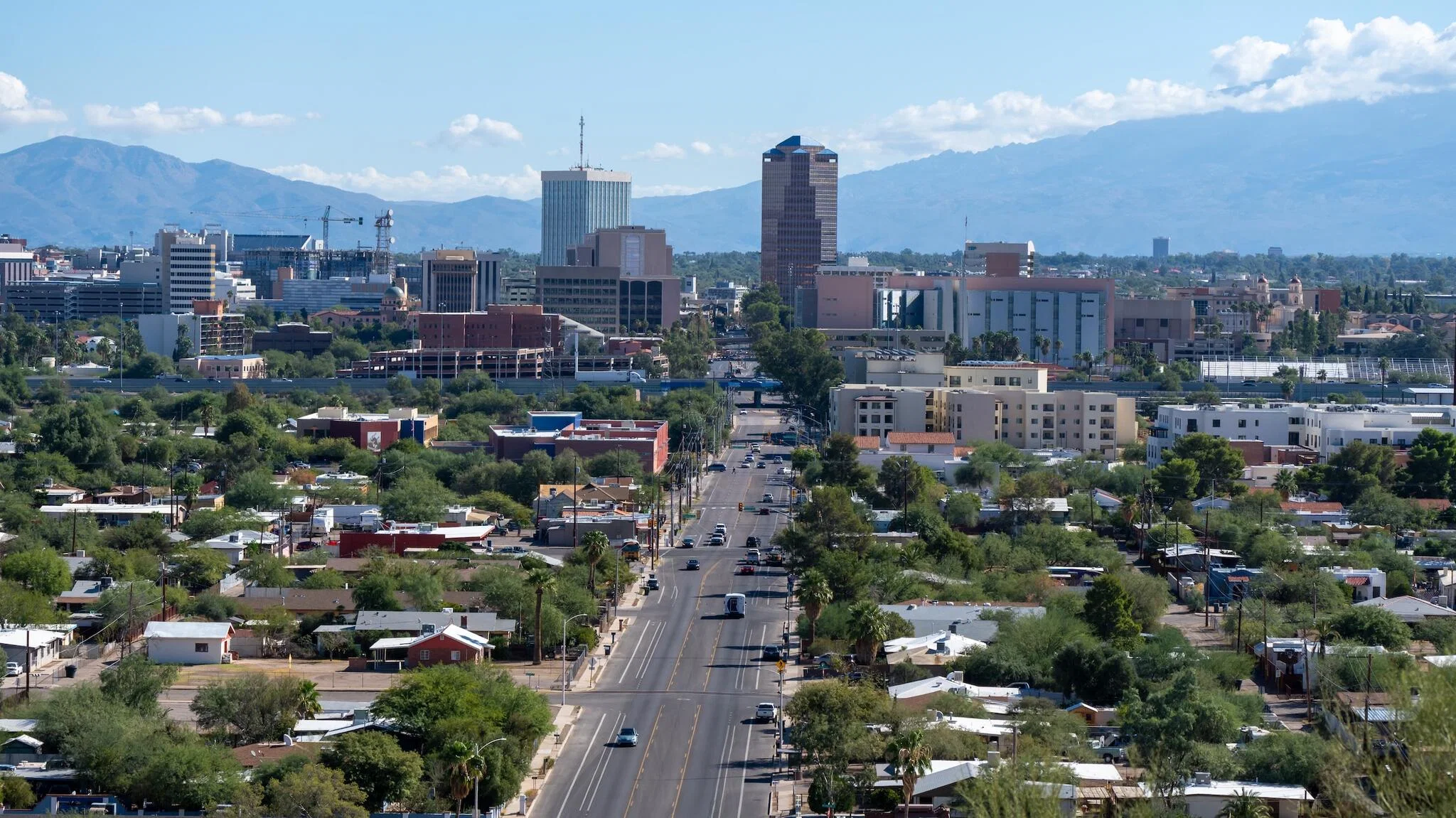
Drexel Heights is an unincorporated residential area on Tucson's southwest side, sitting between South 12th Avenue and the Tucson Mountains, a short distance from Tucson International Airport. Its identity is residential first, but its position near two airfields gives it a distinct logistics angle.
There is no convention hall or resort property inside Drexel Heights itself. What sets this location apart on the map is air-cargo access: exhibit freight moving by air, or crew and executives flying in for a show, often route through Tucson International, which sits closer to Drexel Heights than to most of the rest of the metro.
For a show connected to a Drexel Heights address, the venue plan defaults to downtown Tucson or the west-side resort cluster, while the airport proximity shapes how freight and travel get planned.
Execution priorities for Drexel Heights, AZ
- Use Drexel Heights' proximity to Tucson International Airport as an advantage for air-freight exhibit shipments and flying crew.
- Account for Ryan Airfield to the west as a secondary general-aviation option for executive or charter travel tied to a show.
- Route the actual event floor to downtown Tucson or the west-side resort corridor, since Drexel Heights has no venue of its own.
- Plan surface routes along South 12th Avenue and Ajo Way for crew and freight movement between Drexel Heights and downtown.
- Treat Drexel Heights primarily as an air-access and residential staging reference point rather than an event destination.
A southwest Tucson residential community
Drexel Heights sits southwest of downtown Tucson, generally between South 12th Avenue and the base of the Tucson Mountains, south of Ajo Way. It is unincorporated and primarily residential, developed over decades as an affordable alternative to the pricier north and east sides of the metro.
It does not carry a resort, retail, or entertainment identity. Its relevance to event planning comes almost entirely from what sits nearby: the airport. The community has grown steadily as Tucson's south side has filled in, with a mix of older ranch homes and newer infill housing along its main corridors.
Tucson International Airport proximity
Tucson International Airport sits just east and south of Drexel Heights, making it one of the closer residential areas to the airport's cargo and passenger terminals. For shows where crew, executives, or specialty freight are flying in, that proximity can shave meaningful time off ground transport, particularly for a late-arriving shipment that needs to reach a downtown venue before an early move-in call.
Air-cargo shipments bound for a downtown Tucson show sometimes route through the airport's freight handlers before a final ground leg into the city, and Drexel Heights' location puts any local staging or warehouse space close to that first handoff point.
Ryan Airfield as a secondary option
West of Drexel Heights sits Ryan Airfield, a general-aviation field used for private and charter flights rather than commercial air cargo. It is a relevant secondary option when a show involves executive travel via private aircraft rather than commercial carriers.
Ryan Airfield does not handle the freight volume Tucson International does, but its general-aviation focus makes it useful context for events with VIP or executive attendees flying in privately, especially when discretion or a faster arrival than a commercial terminal allows is part of the request.
No venue inside Drexel Heights
There is no convention center, arena, or resort ballroom located within Drexel Heights itself. Any show tied to a Drexel Heights business address uses venues elsewhere in the metro, most commonly downtown Tucson or the west-side resort cluster near the Tucson Mountains.
The JW Marriott Tucson Starr Pass Resort & Spa, on the west side near Gates Pass, is the closer resort option relative to a downtown venue for anyone starting from Drexel Heights, though it still requires a drive rather than being inside the community itself.
Surface routes to downtown
South 12th Avenue and Ajo Way are the main surface corridors connecting Drexel Heights to downtown Tucson and, further, to I-10. Both are used regularly for crew and light freight movement into the city core, and Ajo Way in particular provides a fairly direct line toward the west-side resort corridor near Starr Pass.
Traffic on these corridors during peak hours can add time to a move-in schedule, so crews planning a tight call from Drexel Heights typically build in a buffer similar to other southwest and south-side neighborhoods. Weekday morning and evening congestion on Ajo Way is the most common source of delay worth planning around.
Air-cargo staging for exhibit freight
For shows relying on air freight for specialty exhibit components, oversized graphics, or last-minute replacement parts, Drexel Heights' location near the airport's cargo facilities makes it a reasonable staging point before the final ground leg to a downtown or west-side venue. A courier or crew member positioned near the airport can often collect a late shipment and reach a downtown venue faster than a team dispatched from farther across the metro.
This matters most for time-sensitive shipments where the difference between an airport-adjacent staging point and a downtown warehouse actually changes the delivery window.
Labor and crew
Install and dismantle labor for Drexel Heights-connected shows draws from the same broader Tucson crew pool used citywide. There is no separate labor jurisdiction tied to the area.
Its position relative to both the airport and the west-side resort corridor means crew travel time varies depending on whether the actual event lands downtown or on the west side. A crew based near Drexel Heights can often reach either destination in a comparable window, which is useful when a production team is splitting attention across two nearby venues on the same day.
Local character beyond logistics
Drexel Heights is a working residential community with modest single-family housing, small commercial strips, and limited retail development compared to the newer master-planned areas of the metro. It has grown steadily as an affordable option close to the airport and to south-side employment.
That residential character reinforces its role in event planning as an access point and staging reference rather than a destination with its own venue inventory. Local businesses tend toward auto services, small retail, and light manufacturing rather than the hospitality or event-services sector.
Fitting Drexel Heights into a show plan
The practical approach for a Drexel Heights-connected show is to plan the venue around downtown Tucson or the west-side resort cluster, while treating the area's airport and airfield proximity as an asset for air freight and travel logistics rather than as a reason to search for a local venue that does not exist.
That combination — event floor elsewhere, air access nearby — is the clearest way to understand how Drexel Heights fits into the broader Tucson trade show market.
What buyers ask about Drexel Heights, AZ
Is there a convention venue in Drexel Heights?
No. Drexel Heights has no convention hall or resort property of its own. Events tied to Drexel Heights addresses use downtown Tucson venues or the west-side resort cluster near Starr Pass.
Why does Drexel Heights matter for air freight?
It sits close to Tucson International Airport's cargo and passenger terminals, which makes it useful for staging air-shipped exhibit freight or coordinating travel for flying crew and executives.
What is Ryan Airfield used for?
Ryan Airfield, west of Drexel Heights, is a general-aviation field used mainly for private and charter flights, relevant for shows with executives traveling by private aircraft rather than commercial cargo.
How far is Drexel Heights from downtown Tucson venues?
Typically fifteen to twenty minutes by road via South 12th Avenue or Ajo Way, depending on traffic and the specific downtown venue.
Is Drexel Heights closer to downtown or the west-side resorts?
It sits roughly between the two, with the west-side resort cluster near Starr Pass often slightly closer than downtown Tucson, depending on the exact starting point within the community.
Should freight for a Drexel Heights-connected show move by air or ground?
It depends on the shipment. Standard exhibit freight typically moves by ground through normal drayage channels, while specialty or time-sensitive components sometimes route through the nearby airport's cargo handlers first.