
Oracle sits in the foothills of the Santa Catalina Mountains, roughly forty minutes northeast of Tucson, closer in feel to a small mountain town than to the fast-growing suburbs on Tucson's north side. Its identity rests on science tourism, ranching history, and a working arts community.
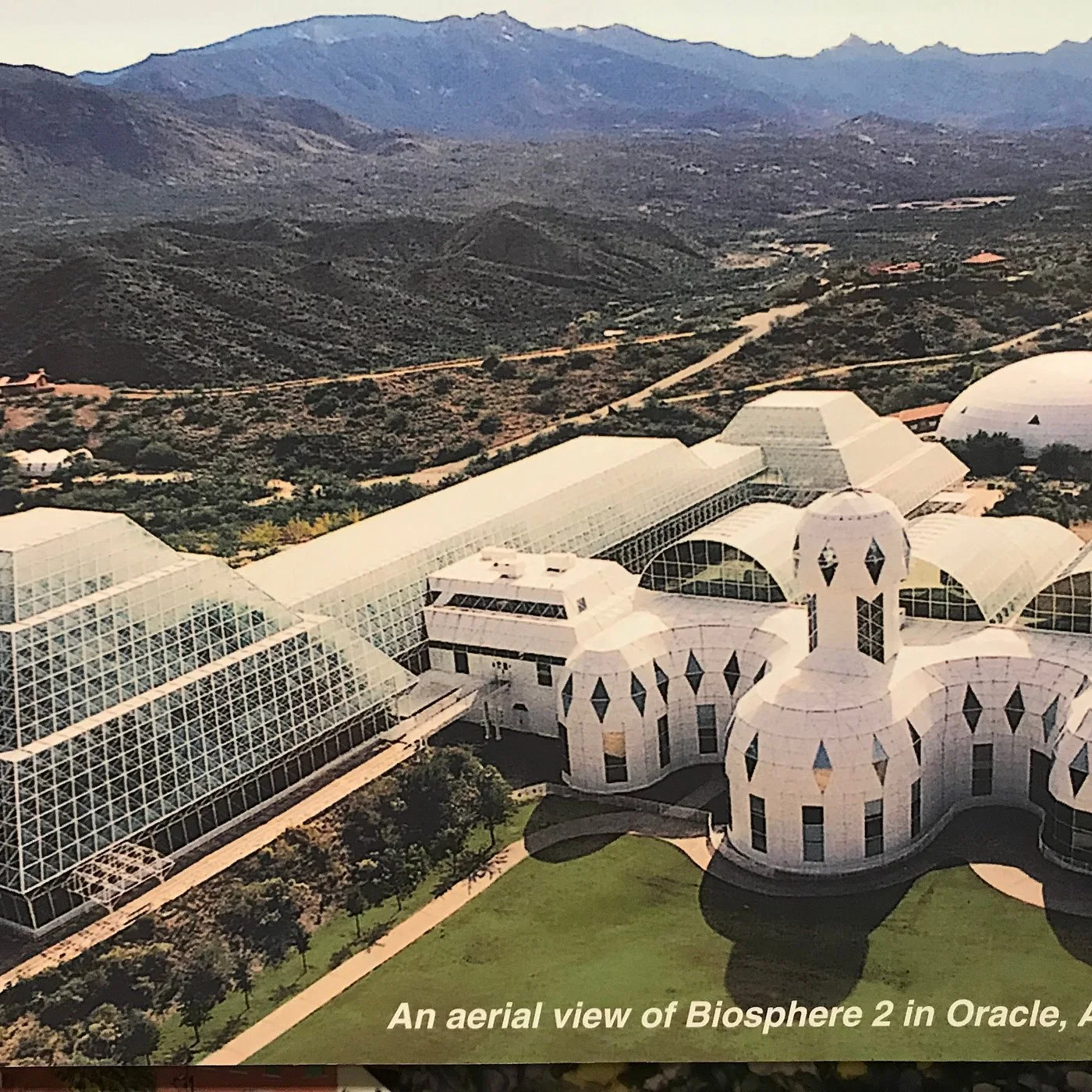
The town's defining landmark is Biosphere 2, the closed-ecosystem research facility that draws visitors, researchers, and school groups from across the country, and which occasionally hosts receptions, tours, and small gatherings tied to its research and education mission.
Beyond Biosphere 2, Oracle has no convention center or resort-scale event property. Production support for anything larger than a Biosphere-hosted gathering is coordinated from the Tucson base, with the town itself serving as the destination rather than the logistics hub.
Execution priorities for Oracle, AZ
- Treat Biosphere 2 as Oracle's defining venue asset for science-education events, media, and small receptions.
- Plan longer crew and freight travel time from Tucson than for closer north-side communities like Oro Valley or Catalina.
- Account for Oracle's small-town infrastructure when scoping catering, lodging, and vendor support.
- Lean on the local arts community and Oracle State Park for context on smaller, character-driven programs.
- Coordinate warehousing, storage, and crew staging from the Tucson base rather than expecting local capacity.
A foothills town with its own identity
Oracle is an unincorporated community in Pinal County, sitting at higher elevation than Tucson in the foothills below the Santa Catalina Mountains. The drive up brings a noticeably cooler climate and a landscape shift from Sonoran desert to oak grassland, which is part of why the town developed as a health retreat and artist community in the early twentieth century. Early visitors came for the cooler air and the perceived health benefits of the elevation, and that retreat-town history left a lasting mark on the pace and scale of the place.
That history left Oracle with a small but active arts scene, a handful of galleries and studios, and a slower pace than the fast-growing communities closer to Tucson. It is a genuinely distinct place, not a satellite suburb.
Biosphere 2: the town's anchor institution
Biosphere 2, now operated by the University of Arizona, is the single most significant venue asset connected to Oracle. The three-acre glass-enclosed research facility was built in the late 1980s for closed-ecosystem experiments and now functions as both an active research site and a public tourist attraction.
Biosphere 2 occasionally hosts education-focused gatherings, media events, donor receptions, and research conferences tied to its University of Arizona affiliation. It is not a general-purpose trade show venue, but for programs with a genuine science, sustainability, or education angle, it is a legitimate and distinctive option near Oracle. Booking any use of the facility runs through the University of Arizona's own scheduling process, which should be factored into the planning timeline well ahead of a target date.
Oracle State Park and the outdoor setting
Oracle State Park, a former guest ranch turned environmental education center, sits just outside town and adds to Oracle's identity as a nature-and-science destination. It occasionally supports small outdoor gatherings and educational programming, though it is not built for large-scale event production.
The surrounding high-desert grassland and views toward the Catalinas give Oracle a setting that is genuinely different from the resort-golf character of Oro Valley or Marana, which matters for any brand trying to place an event in a location with real atmosphere rather than a standard hotel ballroom.
The arts community
Oracle has supported a working artist community for decades, with studios, small galleries, and periodic open-studio events drawing visitors from Tucson and beyond. This gives the town a cultural identity distinct from its Biosphere 2 fame.
For smaller activations or brand events looking for an authentic small-town arts backdrop rather than a conventional meeting space, Oracle's gallery and studio scene is a real, if limited, local resource.
Distance and drive time from Tucson
Oracle sits roughly forty to fifty minutes from central Tucson depending on route and traffic, generally reached via Oracle Road (Highway 77) through Oro Valley and Catalina. That is a longer commitment than the closer north-side communities, and it should be factored into crew scheduling and any same-day round-trip planning.
Because of that distance, most production support for an Oracle event, from AV and staging to graphics and crew, is planned and staged from the Tucson base and transported up rather than sourced locally.
No local warehouse or crew capacity
Oracle's small size means it has no meaningful warehouse, crating, or dedicated event-crew capacity of its own. Any show or activation staged there needs its freight, labor, and equipment planned and staged from Tucson, with the extra drive time built into the schedule.
This is standard for a town of Oracle's size and is not a barrier, but it does mean the planning timeline should treat Oracle as a true offsite location rather than an easy add-on to a downtown Tucson show.
Lodging and hospitality limits
Oracle has limited lodging of its own, mostly small inns and bed-and-breakfast style properties rather than full-service hotels. Larger groups typically stay in Oro Valley or Tucson and drive up for the event day.
Catering and hospitality for an Oracle event similarly often gets sourced from Tucson or Oro Valley vendors and brought in, given the town's limited restaurant and catering infrastructure, though a handful of local cafes and small eateries can supplement a smaller gathering.
What kind of programs fit Oracle
Oracle works best for programs with a genuine tie to science, sustainability, education, or the arts, where Biosphere 2 or the town's character add real value rather than novelty. It is a poor fit for a standard trade show floor or large exhibitor program simply because the venue infrastructure is not there.
Media events, donor and stakeholder gatherings, small research conferences, and brand activations organized on sustainability or space-science themes are the categories most likely to genuinely benefit from an Oracle location.
How Oracle fits the broader Tucson-region market
Oracle should be planned as its own destination with a Tucson-based production team supporting it, not folded into a north-side Tucson suburb plan. The drive time, the limited local infrastructure, and the specific character of Biosphere 2 all set it apart from Oro Valley, Catalina, or the Catalina Foothills, and treating it as a shortcut version of any of those closer markets tends to create scheduling problems late in the planning process.
For the right kind of program, that distinctiveness is the draw. For a conventional trade show, it is a reason to look closer to the Tucson core instead.
What buyers ask about Oracle, AZ
Can events be held at Biosphere 2?
Biosphere 2 occasionally hosts education-focused gatherings, media events, and receptions tied to its University of Arizona research and education mission. It is not a general-purpose trade show venue, but it is a legitimate option for science- or sustainability-themed programs.
How far is Oracle from Tucson?
Roughly forty to fifty minutes by road, typically via Oracle Road (Highway 77) through Oro Valley and Catalina, depending on traffic.
Does Oracle have hotels or lodging for a larger event?
Lodging in Oracle is limited to small inns and bed-and-breakfast style properties. Larger groups typically stay in Oro Valley or Tucson and drive up for the event.
Is there local crew or warehouse capacity in Oracle?
No. Oracle has no dedicated event crew base or warehouse space, so labor, freight, and equipment for an Oracle event are staged and transported from the Tucson base.
What kind of events fit Oracle best?
Programs with a genuine science, sustainability, education, or arts angle fit Oracle best, particularly those that can use Biosphere 2 or the town's arts community as a meaningful backdrop rather than a generic meeting space.
Is Oracle part of the Catalina Foothills or Oro Valley market?
No. Oracle is a distinct small town further north and at higher elevation, with its own character and infrastructure limits. It should be planned separately from the closer, faster-growing north-Tucson suburbs.