
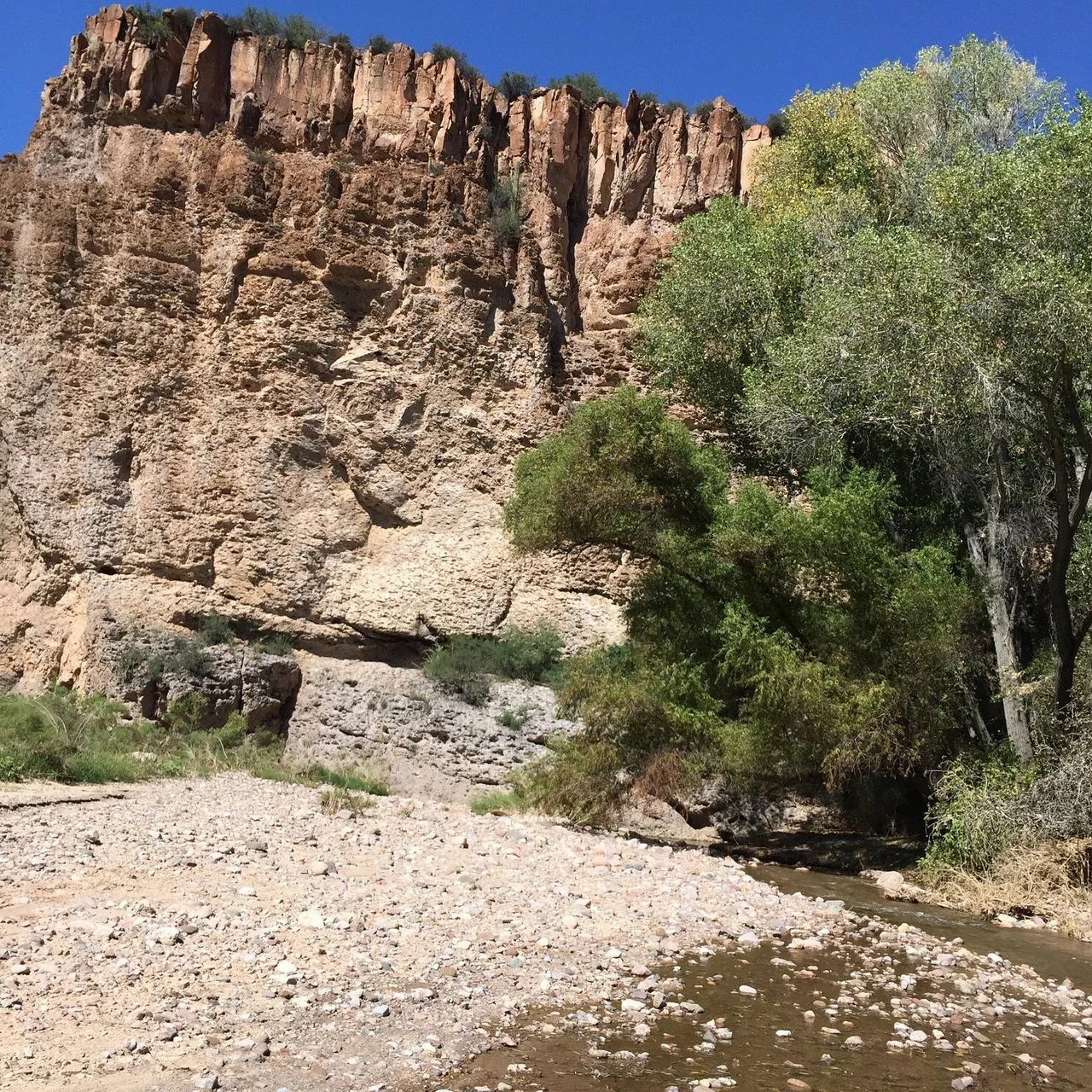
San Manuel was built in the 1950s by the Magma Copper Company as a planned community to house workers at one of Arizona's largest copper mines and smelters. It sits in the San Pedro Valley north of Oracle, laid out with the deliberate grid and civic infrastructure typical of mid-century company towns.
The mine and smelter that built the town closed in the 1990s, and San Manuel today is a much smaller community than it was at its peak, without a meetings or hospitality economy of any scale. Its identity remains tied closely to that company-town history, and many of the original buildings and street layouts survive largely intact from the town's founding decades.
There is no convention or resort venue in San Manuel. Any event connected to the town, whether a heritage program, a community gathering, or a small local activation, is planned and staged from a Tucson production base rather than relying on local venue or crew capacity.
Key priorities for San Manuel, AZ
- Plan on roughly an hour of drive time from Tucson, generally via Oracle Road and Highway 77 through Oracle.
- Recognize San Manuel's identity as a planned Magma Copper company town, distinct from the older organic mining settlements nearby.
- Source all crew, freight, and equipment from the Tucson base, since San Manuel has no dedicated event infrastructure.
- Consider the town's mid-century planned layout and civic buildings as a possible backdrop for heritage-focused programs.
- Coordinate with the neighboring town of Mammoth when scoping the broader San Pedro Valley area's history and logistics.
A planned company town
San Manuel was purpose-built by the Magma Copper Company starting in the early 1950s to house the workforce for its nearby underground copper mine and smelter, one of the larger copper operations in Arizona at the time. Unlike towns that grew organically around mining claims, San Manuel was laid out from the start with planned residential grids, schools, and civic buildings, closer in spirit to a mid-century suburb than a frontier mining camp.
That planned-community character gives San Manuel a distinct architectural and civic identity compared to older, more improvised mining settlements in the region, even though its population has shrunk significantly since the mine and smelter closed in the 1990s.
No event or meetings infrastructure
San Manuel has no hotel, conference facility, or purpose-built event venue. Its commercial base contracted substantially after the mine's closure, and today the town functions primarily as a small residential community rather than a business or tourism destination.
Anything beyond an informal local gathering held in San Manuel needs the venue capability brought in from outside, along with the crew, equipment, and staging support to run it.
Distance and access from Tucson
San Manuel sits roughly an hour from central Tucson, generally reached via Oracle Road (Highway 77) north through Oro Valley, Catalina, and Oracle before continuing into the San Pedro Valley. It is one of the farther points on the map from the Tucson production base.
Given that distance, any San Manuel-connected event needs a schedule that fully accounts for round-trip crew travel time, with freight and staging planned a day ahead rather than as a same-day operation. Treating the trip as anything shorter tends to compress setup time in a way that creates avoidable risk on event day.
Civic architecture as a program backdrop
San Manuel's planned mid-century layout, including its original civic and commercial buildings, offers a distinctive backdrop for programs with a genuine heritage, industrial-history, or documentary angle. That kind of authenticity is difficult to replicate with a standard venue.
This is a narrow use case rather than a general event fit, but for the right client, a heritage association, a mining-industry gathering, or a media production, San Manuel's built environment is a real asset.
Freight and equipment logistics
All freight, tenting, AV, and crew for a San Manuel event travel from the Tucson base along Highway 77. There is no local warehouse, crating, or crew-labor capacity in the town itself.
Because of the drive time involved, production plans for San Manuel typically dedicate a full day to setup travel and staging, treating the trip similarly to Mammoth or other far San Pedro Valley locations rather than a quick out-and-back.
Lodging and support services
San Manuel has minimal lodging of its own. Crew and any traveling attendees typically stay in Tucson or Oro Valley and commute to the town for the event day, with Oracle available as a closer, smaller alternative if needed.
Catering, rentals, and other support services are sourced from Tucson or Oro Valley and transported in, since San Manuel's own commercial base cannot support event-scale demand.
Relationship to Mammoth and the San Pedro Valley
San Manuel and Mammoth sit close together in the San Pedro Valley and share a closely linked mining history, even though San Manuel was a planned company town while Mammoth grew up around ore processing. The two are often scoped together for any program touching the valley's mining past, and residents of one town frequently have direct family or work ties to the other.
Both towns face the same practical realities for event planning: minimal local infrastructure, significant drive time from Tucson, and a shared reliance on outside production support.
Population and community context today
San Manuel's population has declined substantially since the mine and smelter era, and much of the original company housing stock remains, giving the town a preserved, if quiet, mid-century character. Community life today centers on longtime residents rather than any commercial or tourism draw, with a handful of local institutions carrying forward traditions from the town's mining-era heyday.
That context matters for any event planner: San Manuel is a real community with its own history and residents, not a blank backdrop, and any program held there should engage with that local reality rather than treat the town as incidental scenery.
How San Manuel fits the broader market
San Manuel should be planned as a distinct, distant rural location within the wider Tucson-region footprint, supported entirely by a Tucson-based production team rather than any local capacity. The drive time and infrastructure limits are comparable to Mammoth and should be planned for accordingly, with the same conservative buffer built into the crew and freight schedule.
For a program with a genuine connection to the town's Magma Copper history or its preserved planned-community character, that distinctiveness is a real asset. For a standard trade show, a location closer to Tucson will make more practical sense.
Questions about San Manuel, AZ
Is there a venue in San Manuel for hosting an event?
No. San Manuel has no hotel, conference facility, or purpose-built event space. Any event held there requires the venue itself to be brought in, along with all supporting crew and equipment.
How far is San Manuel from Tucson?
Roughly an hour by road, typically via Oracle Road (Highway 77) through Oro Valley, Catalina, and Oracle before reaching the San Pedro Valley.
What is San Manuel known for?
San Manuel was built in the early 1950s by the Magma Copper Company as a planned company town to house workers at its nearby copper mine and smelter, which closed in the 1990s.
Is there local crew or freight capacity in San Manuel?
No. All crew, freight, and equipment for a San Manuel-connected event are sourced and staged from the Tucson base, given the town's limited size and infrastructure.
What kind of events make sense in San Manuel?
Programs with a genuine heritage, mining-industry, or documentary connection to the town's Magma Copper history make the most sense. Standard trade shows or conferences are not a practical fit given the lack of local venue infrastructure.
Is San Manuel close to Mammoth?
Yes. Mammoth sits nearby in the same San Pedro Valley, and the two towns share closely linked mining history and similar distance and logistics considerations from Tucson.