
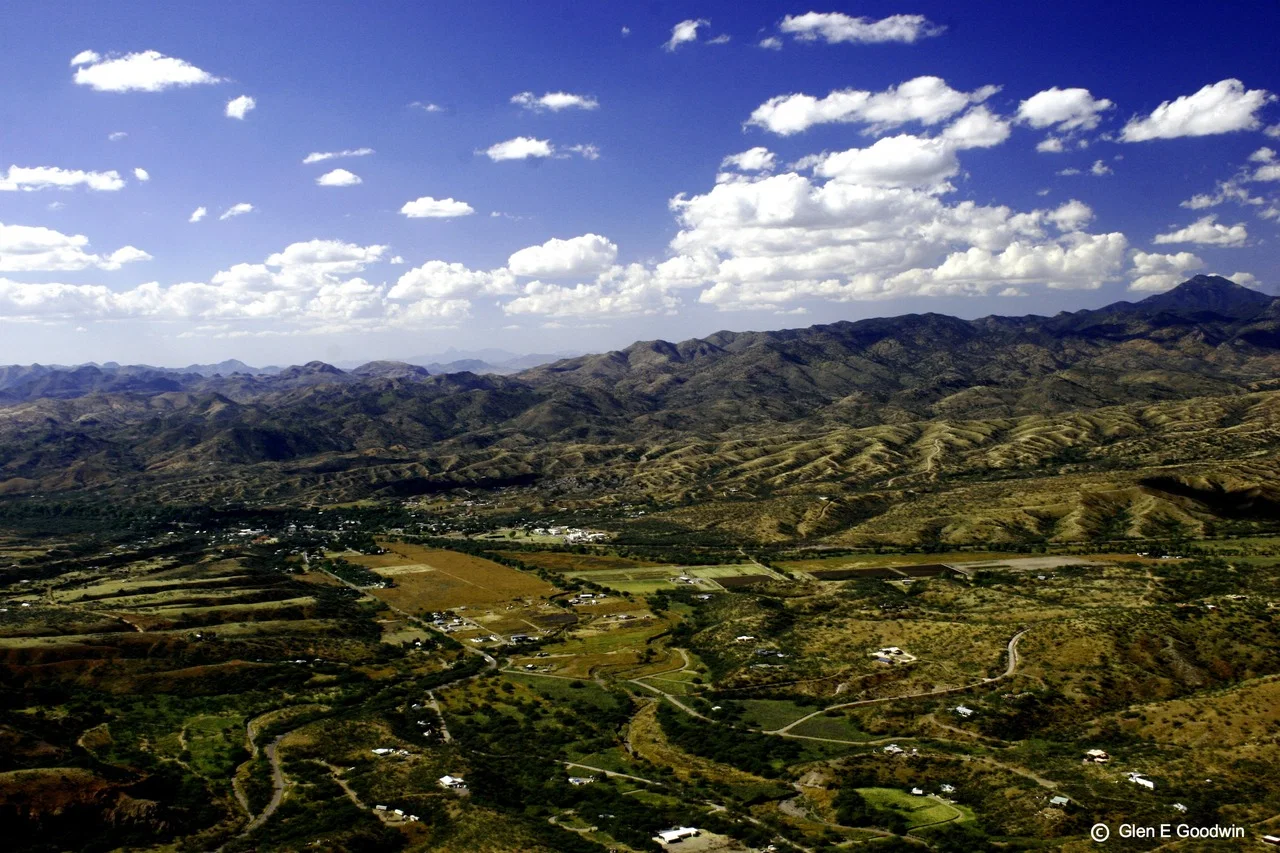
Patagonia is a small town in the Sonoita Creek valley, south of Sonoita along AZ-82, with a year-round population small enough that it has no meaningful commercial venue capacity of its own. What it does have is a genuine identity built on two things: art, expressed through a compact downtown of galleries and studios, and birding, drawing visitors from across the country to the Patagonia-Sonoita Creek Preserve and the Paton Center for Hummingbirds, both known internationally within birding circles for rare species sightings.
Because Patagonia has no conference hotel, resort, or fairgrounds, any program larger than a small private gathering in a local hall or outdoor space gets staged from Tucson or from the nearest venue-capable town, Sonoita, a short drive north, with Patagonia itself treated as either the destination for a small, intimate event or as a day-trip stop for a group meeting somewhere else nearby.
That said, Patagonia's small scale is exactly what some programs are looking for: a private retreat, a small workshop, or a nature-focused corporate offsite that wants a genuinely quiet, low-traffic setting has few better options in Southern Arizona than this town.
Execution priorities for Patagonia, AZ
- Treat Patagonia as a small-scale destination market, not a venue-capable host town for a large program.
- Route any program needing real function space to Sonoita, a short drive north, or the Tucson core.
- Lean into the birding and arts identity for any content, signage, or activity planning done in town.
- Check Paton Center and preserve visiting hours before scheduling any nature-linked group activity.
- Budget close to ninety minutes of drive time from the Tucson crew base for freight and crew runs.
A town built on birding, not convention infrastructure
Patagonia's international reputation among birders rests on the Patagonia-Sonoita Creek Preserve, a riparian habitat that draws rare species and serious birders from around the country, and the Paton Center for Hummingbirds, a small preserve specifically known for hummingbird diversity. That reputation brings a steady, if modest, flow of nature tourism to a town that otherwise has no hotel of meaningful size, no conference space, and no dedicated event venue.
Any program that wants to use the birding identity as a draw, a nature-focused corporate offsite or a small retreat centered on a guided preserve visit, needs to plan around limited local lodging and no formal meeting space, treating the town itself as the experience rather than the venue. A morning guided walk followed by an afternoon working session, held under a tent or in a rented hall, is a realistic template for this kind of program.
A small but real arts community
Patagonia's compact downtown holds a cluster of galleries and studios, smaller and quieter than Tubac's arts district but genuine in the same way, run by working artists rather than positioned as a tourist attraction first. A gallery reception or small workshop hosted in town draws on that same intimate, low-traffic character that makes Patagonia distinct from the busier arts-village model further west.
Because the downtown is only a few blocks, any event using multiple gallery or studio stops functions naturally as a walking program, with guests moving on foot between venues rather than needing shuttle or parking logistics of any real complexity.
No local venue infrastructure
There is no hotel, resort, or fairgrounds in Patagonia capable of hosting a conference-scale program, and any group planning something beyond a small private gathering in a local hall, park, or outdoor space needs to look outside town for real function space. That makes Patagonia fundamentally different from Sonoita, its nearest neighbor, which has the fairgrounds and winery event infrastructure Patagonia lacks entirely.
The town does have a community center and a handful of small outdoor spaces that can be rented for a private gathering, and those work well for a retreat capped at a few dozen guests. Anything larger needs tables, tenting, and power brought in from outside, since none of the local spaces come pre-equipped for that scale.
Sonoita as the practical staging point
For any program that wants Patagonia's birding or arts character but needs actual meeting or banquet space, Sonoita, roughly fifteen minutes north, is the practical answer: book the meeting space there and treat Patagonia as a day-trip excursion, a preserve visit, a gallery walk, or a lunch stop, built into the broader itinerary.
Drive time and freight from Tucson
Patagonia sits close to ninety minutes from the Tucson crew base, the longest drive of any market in this Southern Arizona coverage area, following AZ-83 and then AZ-82 through Sonoita. That distance rules out same-day round trips for anything beyond a very small, minimal-freight job, and most Patagonia-linked work is planned either as a day trip carrying a light equipment load or as a job staged primarily from Sonoita with Patagonia as a side excursion.
Freight or crew needing to reach Patagonia directly should plan the full drive time on both ends and build in a buffer for the two-lane, foothill-and-grassland roads that make up most of the route.
Crew and staffing reach
Patagonia has essentially no local event-labor pool, so any staffing beyond a handful of local volunteers or a small host-organized team needs to travel from Tucson, adding real cost relative to the size of most Patagonia programs. That cost is one of the clearest signals that a program should be reconsidered as Sonoita-based with a Patagonia excursion, rather than staged in Patagonia directly, once it grows beyond a very small footprint.
For the smallest jobs, a single technician and a compact equipment package covering sound and basic lighting can usually cover a Patagonia gathering without needing a full production crew, which keeps the trip proportional to the size of the event.
Seasonal timing tied to birding
Spring and fall migration seasons bring the heaviest birding traffic to Patagonia, and those same windows are worth targeting for any program that wants to lean on the town's reputation, since guest speakers, guided walks, and preserve access are all easier to arrange when the birding community itself is most active in the area.
Setting realistic expectations for scale
The single most important planning decision for a Patagonia program is accepting its scale honestly from the start. This is not a market that will ever support a multi-hundred-person conference or a trade-show floor, and treating it as a small, intimate, nature-or-arts-focused destination, with the heavier logistics based in Sonoita or Tucson, is what makes a Patagonia program work rather than strain against a town that was never designed for that kind of volume.
Clients coming from a large-market background sometimes need a direct conversation about that scale early, since a plan sized for a downtown Tucson venue will not translate to Patagonia without significant rework of the guest list, staging, and vendor plan.
The realistic Patagonia event mix
In practice, Patagonia hosts small private retreats, nature-focused offsites tied to the preserve and hummingbird center, and modest gallery or arts programming, almost always sized for a few dozen guests rather than a few hundred, with any larger companion event staged from Sonoita or Tucson.
What buyers ask about Patagonia, AZ
Does Patagonia, AZ have a hotel or conference venue?
No. Patagonia has no hotel of meaningful size, resort, or dedicated conference space. Programs needing real function space are typically staged from nearby Sonoita or from the Tucson core.
What makes Patagonia a destination for events?
Its birding reputation, centered on the Patagonia-Sonoita Creek Preserve and the Paton Center for Hummingbirds, and its small, working arts community, both of which suit intimate, nature-or-arts-focused programs rather than large conferences.
How far is Patagonia from the Tucson crew base?
Close to ninety minutes, the longest drive of any market in this Southern Arizona coverage area, via AZ-83 and AZ-82 through Sonoita.
Where should a larger program near Patagonia be held?
Sonoita, about fifteen minutes north, has the fairgrounds and winery event infrastructure Patagonia lacks. A common approach is booking meeting space in Sonoita and treating Patagonia as a day-trip excursion.
Is there local crew or event labor available in Patagonia?
Essentially none. Staffing beyond a small host-organized team needs to travel from Tucson, which is worth factoring into cost for any program considering Patagonia as its primary site rather than a side excursion.
When is the best time for a birding-focused program in Patagonia?
Spring and fall migration seasons, when birding traffic and guide availability are both at their highest, are the strongest windows for a program centered on the preserve or hummingbird center.