
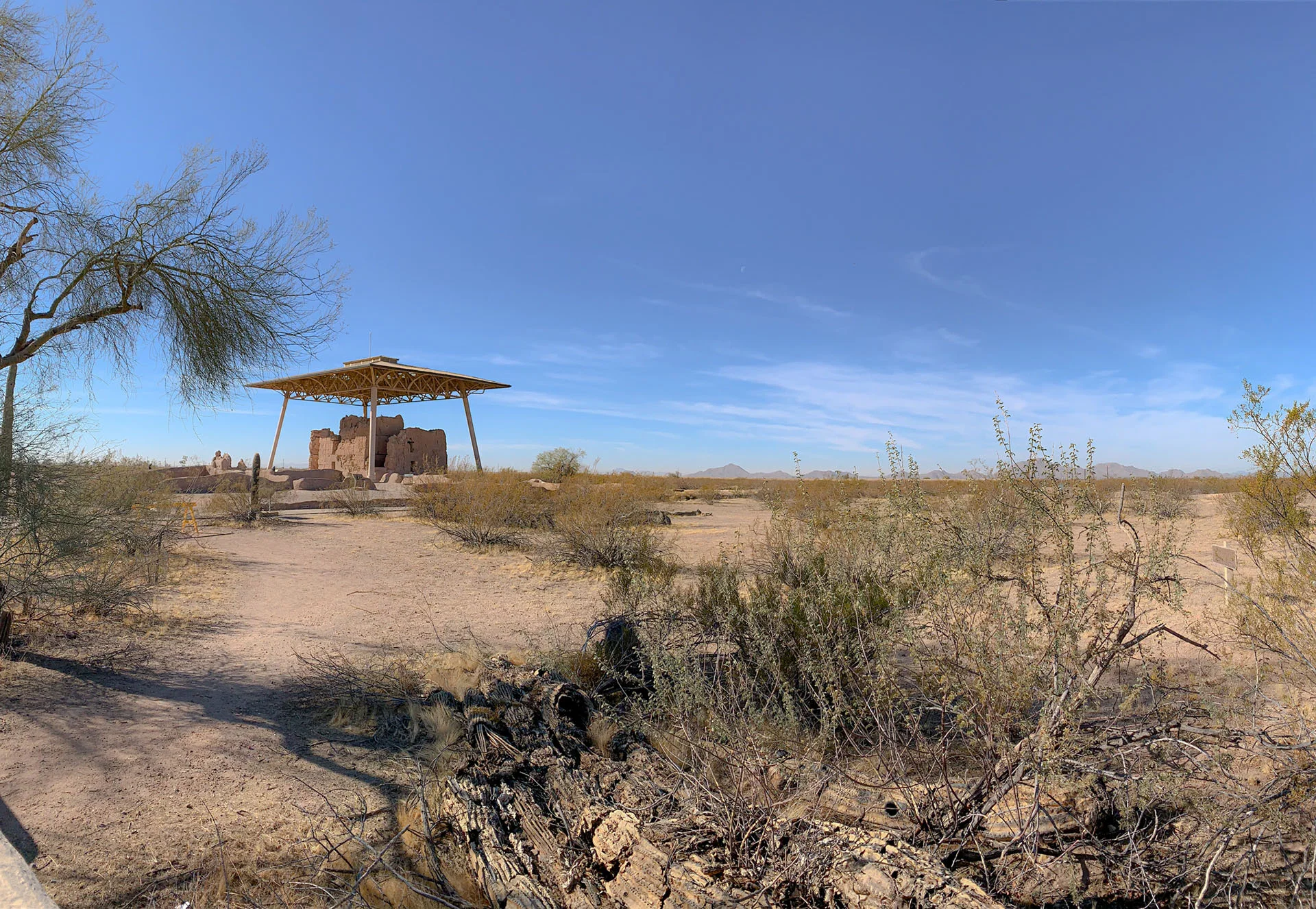
Coolidge is a small Pinal County town best known for hosting Casa Grande Ruins National Monument, the National Park Service site preserving the Hohokam Great House, despite the monument's name referring to the larger neighboring city rather than Coolidge itself. That distinction matters for event planning, because monument-adjacent programming — education partnerships, ranger-led public events, tourism gatherings — is a genuine local event category here, separate from anything happening in Casa Grande proper.
Agriculture remains a real part of Coolidge's economy and identity, and farm-supply, irrigation-district, and cooperative meetings are a recurring event type, similar in character to what shows up in other small Pinal and Graham County towns. The town itself has limited venue infrastructure, so most production work is coordinated from Casa Grande, a short drive northwest, or from the Tucson base for larger jobs.
Coolidge sits close enough to Casa Grande and to I-10 that it should be planned as an easy add-on to a Casa Grande or Florence trip when the timing allows, rather than as an isolated standalone run. Its small size means the honest plan is usually modest in scale — civic or agricultural gatherings and monument-tied programming rather than large trade shows.
Key priorities for Coolidge, AZ
- Distinguish monument-related events tied to Casa Grande Ruins National Monument from general Coolidge civic or agricultural gatherings early in planning.
- Coordinate with National Park Service staff directly for any event connected to the monument, since their scheduling and access rules govern that site.
- Use Casa Grande's venue stock as the practical fallback for anything larger than a small civic or agricultural meeting.
- Route freight and crew through Casa Grande when possible, since Coolidge sits just northeast of it off I-10.
- Keep event scale realistic — Coolidge supports small community and agricultural gatherings, not large consumer expos.
Coolidge and the monument that shares its region
Casa Grande Ruins National Monument, the National Park Service site protecting the centuries-old Hohokam Great House, is physically located within Coolidge even though its name points to the larger city nearby. Events connected to the monument — educational partnerships with schools, ranger-led public programs, heritage tourism gatherings — are a real and specific local category, and they run through National Park Service scheduling rather than a standard commercial venue process.
Any production work tied to the monument needs to respect federal site rules around access, staging, and materials, which differ meaningfully from a hotel or civic-hall booking.
Agriculture as the economic backbone
Coolidge sits in cotton and grain farming country, and the local economy still runs substantially on agriculture, similar to other small towns across Pinal and Graham counties. Farm-supply demonstrations, irrigation-district meetings, and cooperative gatherings are a recurring, modest-scale event type here, drawing a local audience rather than a regional one.
Growers and irrigation districts in the Coolidge area tend to plan their meeting calendars around planting and harvest cycles, and a production schedule that respects that rhythm — avoiding the busiest field weeks — gets better turnout than one that ignores field schedules in favor of a generic monthly cadence.
Limited local venue stock
Coolidge does not have hotel conference space or a dedicated event venue comparable to what Casa Grande or Tucson offer. Civic buildings and community halls handle what local events exist, and anything requiring more capacity or infrastructure moves to Casa Grande, a short drive to the northwest.
Even basic AV equipment is often not resident in Coolidge itself, so confirming what a civic building can and cannot supply on its own, versus what needs to travel in, is a necessary first step before quoting a local job.
Casa Grande as the practical hub
For any Coolidge-connected event that outgrows local civic space, Casa Grande's venue mix — retail, corporate, and civic — is the realistic next step. Planning a Coolidge program with Casa Grande as the built-in overflow option, rather than assuming a purely local venue solution, keeps expectations grounded from the start.
This also applies to catering and rental vendors, since Coolidge itself has a limited local supply base and most vendors serving the town also serve Casa Grande as their primary market.
Reaching Coolidge from Tucson
Coolidge sits roughly ninety minutes from Tucson via I-10 and local roads through or near Casa Grande, making it a same-day trip for most crews. Combining a Coolidge stop with a Casa Grande or Florence booking on the same day is usually the most efficient way to serve the area, since all three towns sit close together in Pinal County.
For a single small Coolidge booking on its own, the round trip still eats a meaningful part of a crew's day, so scheduling it alongside another nearby stop when possible is worth raising with the client during initial planning.
Working with National Park Service scheduling
Any event tied to Casa Grande Ruins National Monument needs to go through National Park Service coordination well ahead of the date, since federal sites operate on their own approval and access processes rather than a commercial venue's booking calendar. Building in that lead time is essential for monument-adjacent programming.
Federal approval timelines can run considerably longer than a commercial venue's booking window, so a monument-tied event should be flagged to the client as needing extra lead time from the very first planning conversation.
Realistic event scale for Coolidge
Coolidge is not a market for large trade shows, and setting that expectation with clients early avoids a mismatched proposal. Small agricultural gatherings, civic meetings, and monument-tied education programs are the honest scope of work here, and production plans should be sized accordingly.
A client arriving with a large-show budget and a Coolidge address is usually better served by relocating the program to Casa Grande and treating Coolidge as a site visit or satellite activity rather than the main event location.
Staffing a small Pinal County town
Local labor in Coolidge is limited, so most production support — even for modest events — travels in from Casa Grande or Tucson. Given the small scale of most Coolidge bookings, this usually means a lean crew rather than a full production team.
Setting expectations for Coolidge clients
Clients booking in Coolidge should understand the town's identity is split between agriculture and the national monument, that venue capacity is genuinely limited, and that Casa Grande is the natural next step for anything beyond a small local gathering. That framing keeps a Coolidge program realistic from the first planning conversation.
Questions about Coolidge, AZ
Is Casa Grande Ruins National Monument actually in Coolidge?
Yes. The monument, despite its name, sits within Coolidge city limits. Events connected to it go through National Park Service scheduling rather than a standard commercial venue process.
Does Coolidge have its own convention or event venue?
No. Coolidge relies on civic buildings and community halls for local events. Anything larger typically moves to Casa Grande, a short drive to the northwest.
What kinds of events happen in Coolidge?
Farm-supply and irrigation-district meetings tied to local agriculture, small civic gatherings, and education or tourism programming connected to Casa Grande Ruins National Monument.
How far is Coolidge from Tucson?
About ninety minutes via I-10 and local roads near Casa Grande, making it a realistic same-day trip, often combined with a Casa Grande or Florence stop.
Can you produce a large trade show in Coolidge?
Not realistically within Coolidge itself. The honest scope is small agricultural or civic gatherings and monument-tied programs; larger events should plan on Casa Grande venues instead.
Who handles scheduling for monument-related events?
The National Park Service, which operates its own approval and access process for Casa Grande Ruins National Monument, separate from any commercial venue booking system.